Mercury Capital
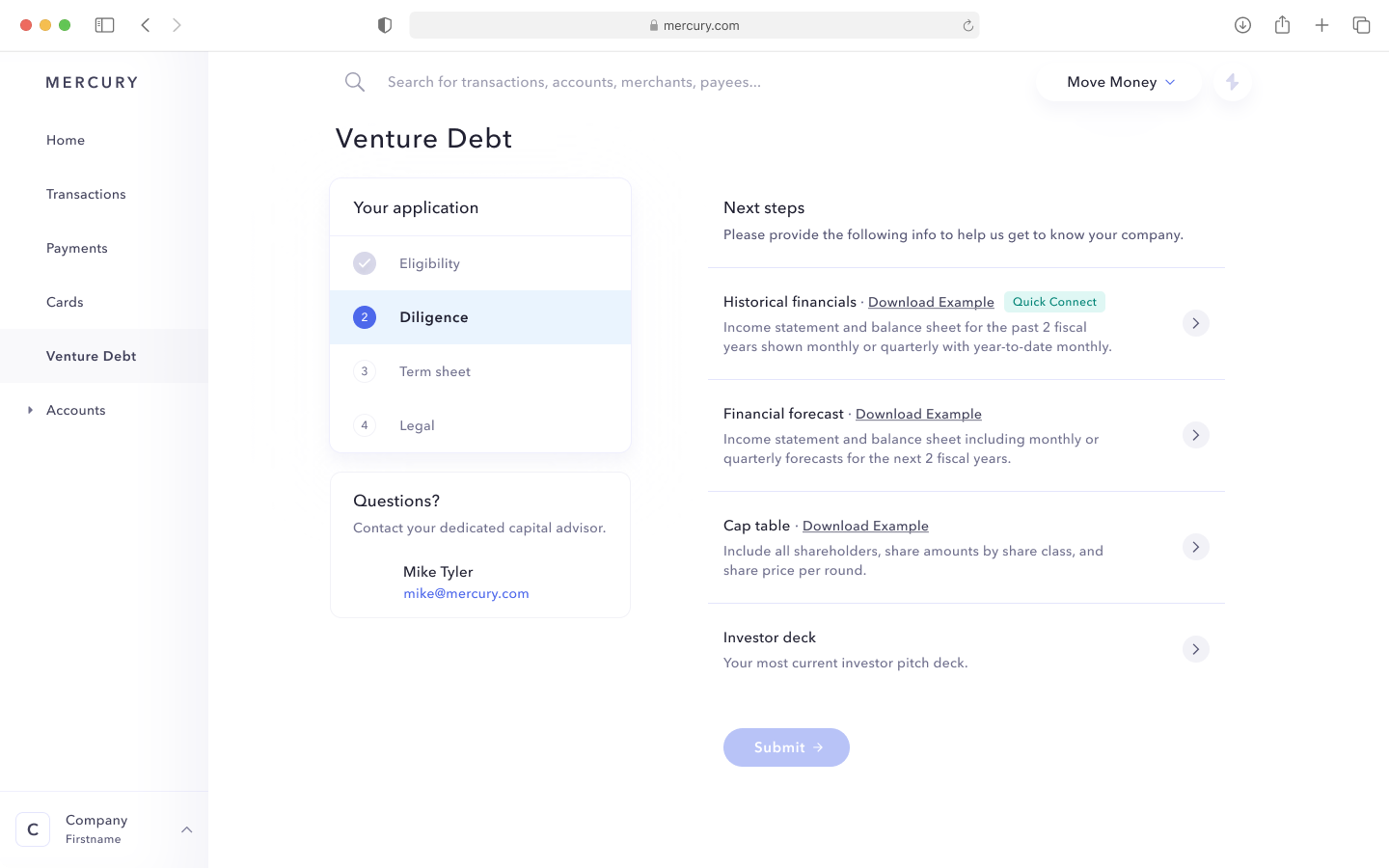
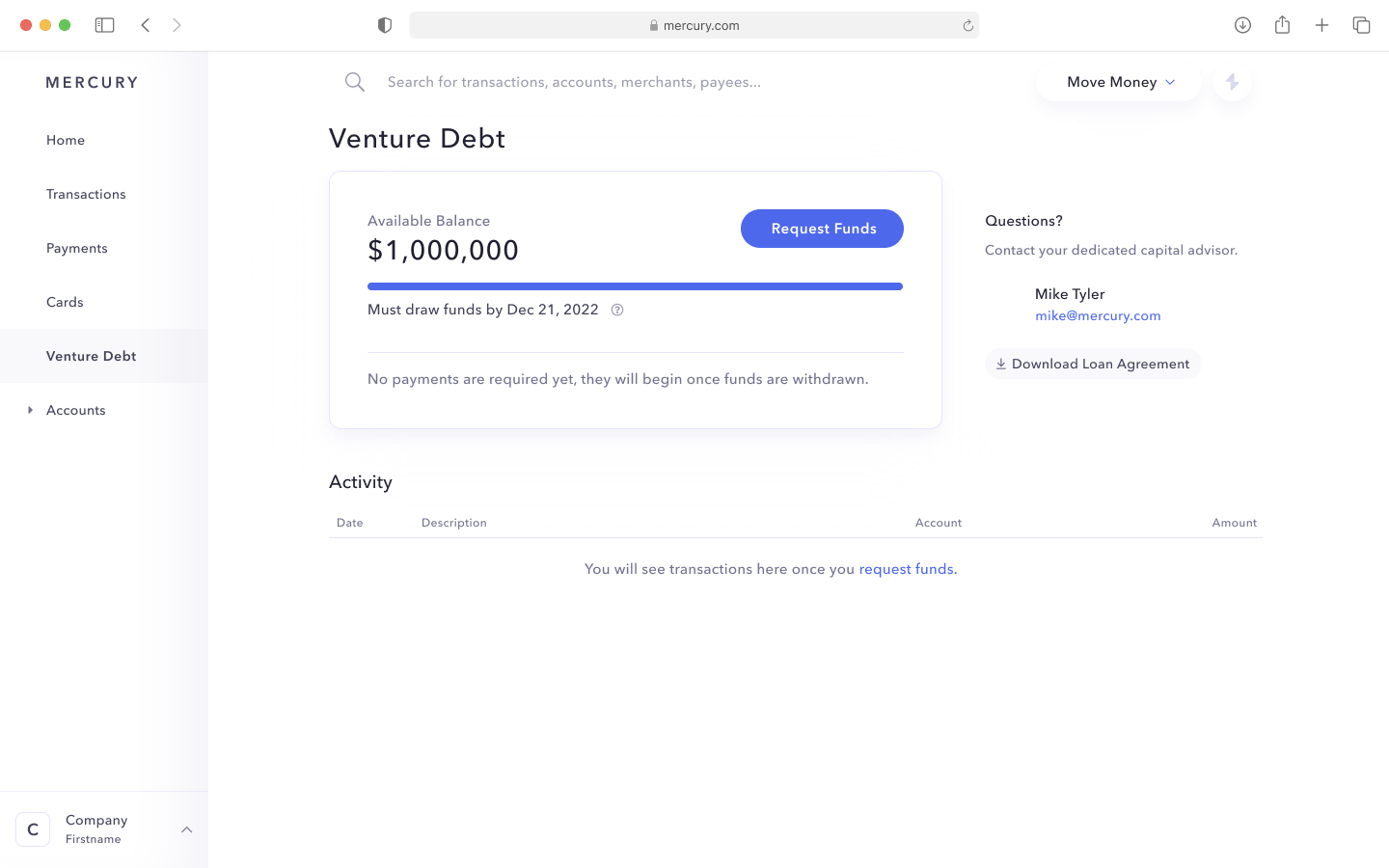
Mercury had six ways to fund a startup and no way to tell a founder which one was theirs. I designed Capital: a guided quiz, a comparable set of options and the application and servicing that follow.
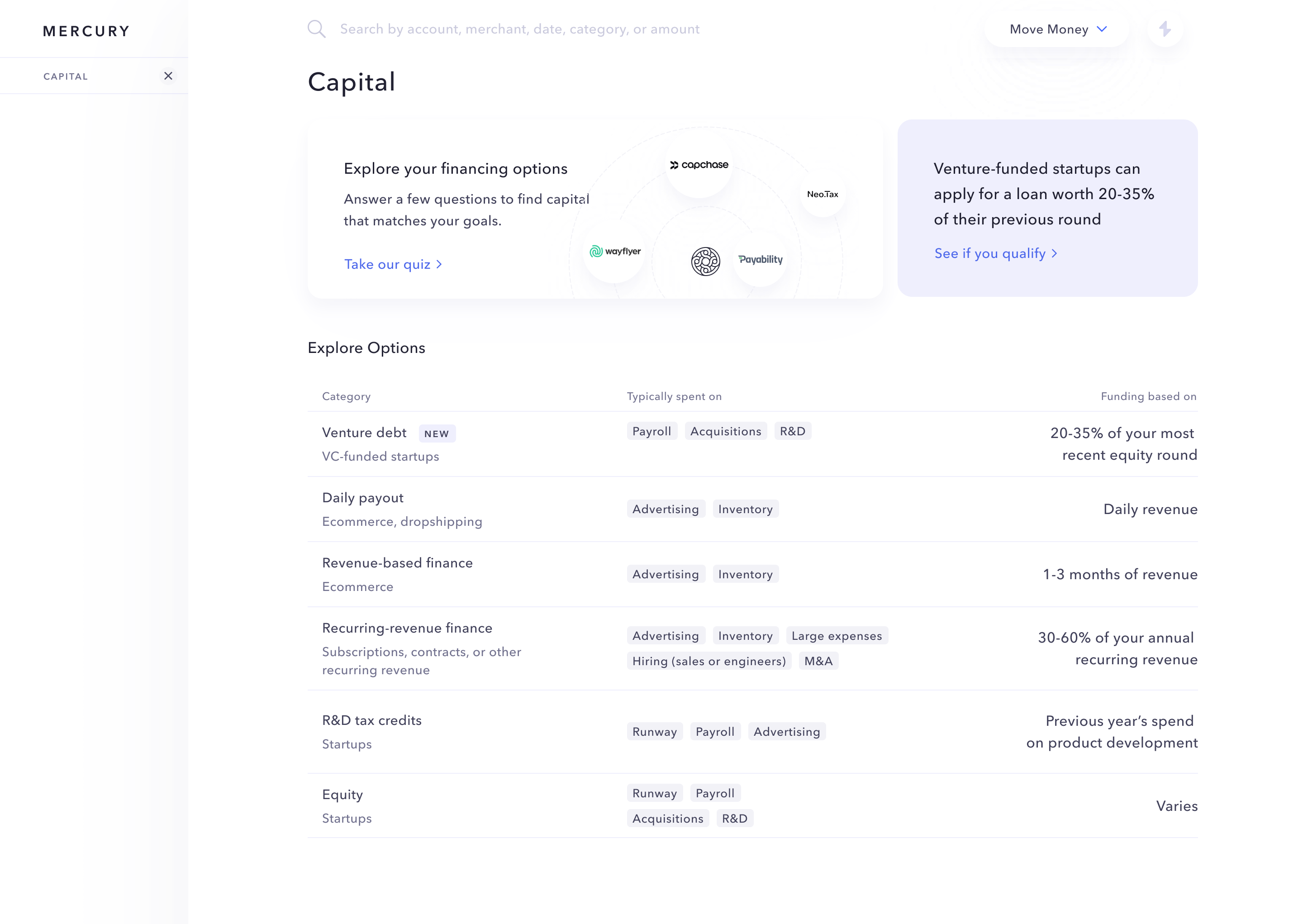
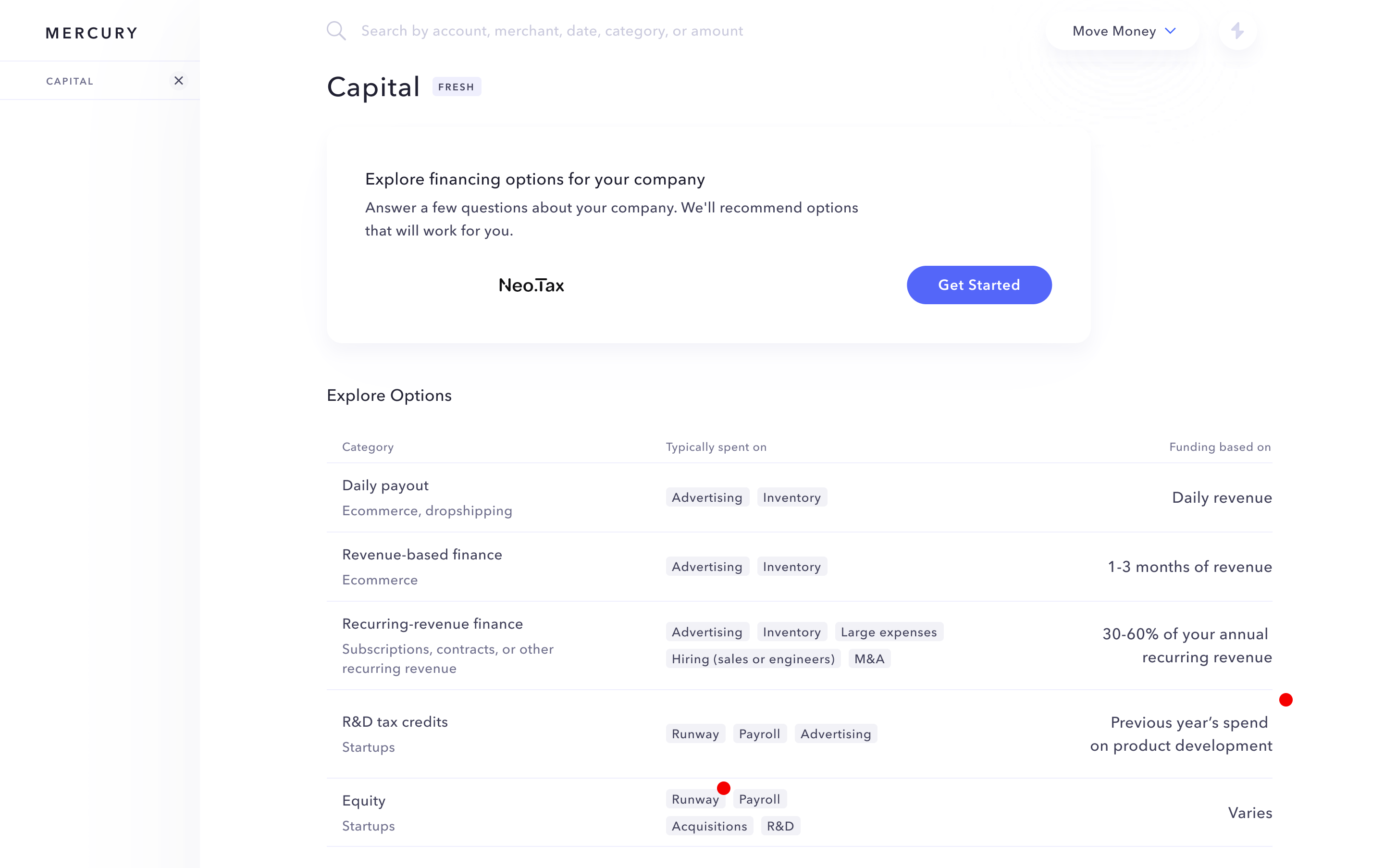
Capital home · quiz entry, eligibility callout and the options list
Problem
Founders were choosing capital by vibes.
Debt, revenue-based finance, daily payout, R&D credits and equity each came with different costs, qualification rules and partners. Founders were making six-figure decisions from a blog post and a friend’s recommendation.
Mercury could already see revenue, runway and spend, so it was well placed to help. The design problem wasn’t generating offers; it was making them comparable. Six products described in six vendors’ vocabularies can’t be compared.
The work became a translation layer: one schema every product had to answer to, and a short quiz that narrowed six paths to the two or three that could work.
Mapping the landscape
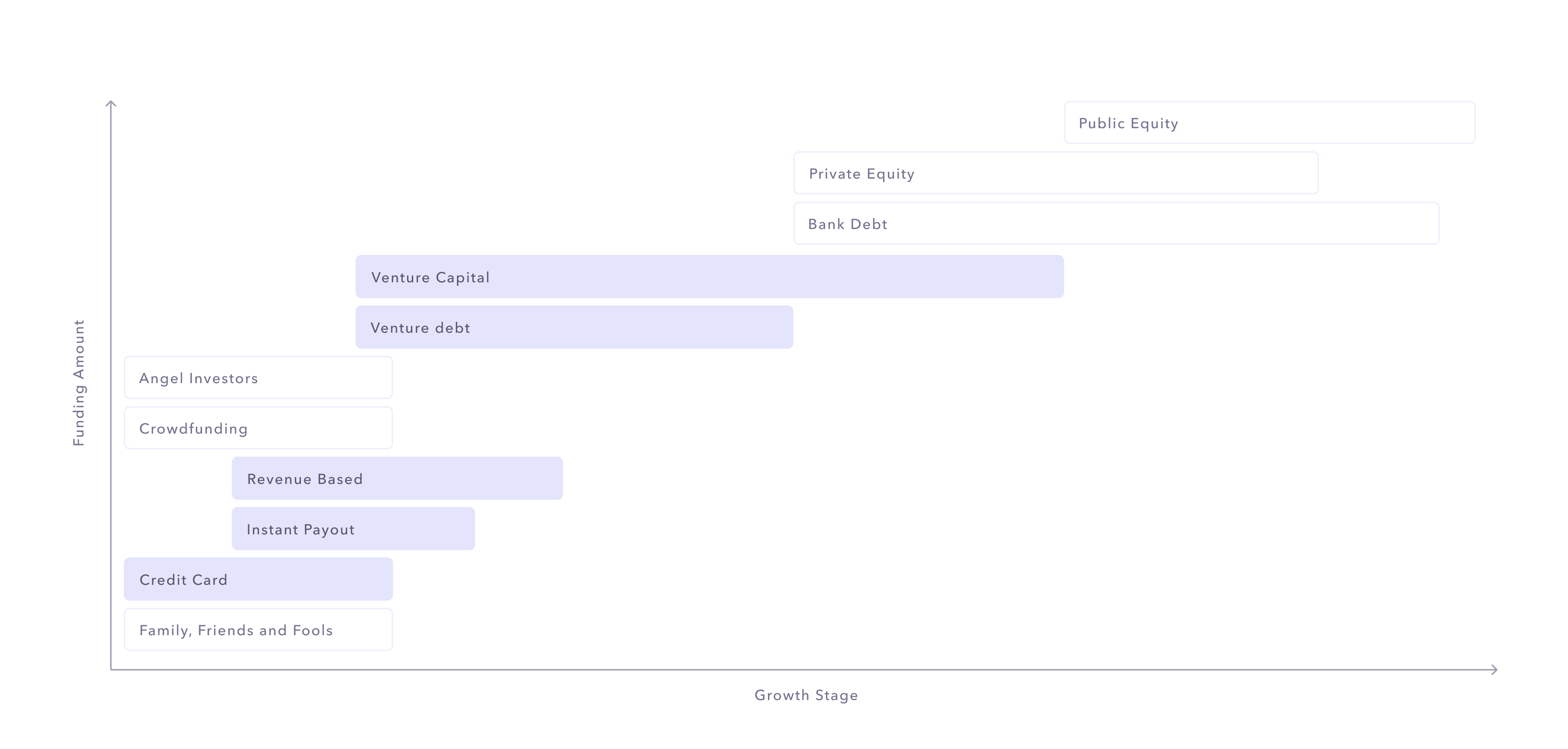
Before designing a single screen, I plotted every source of startup capital by amount and growth stage, including the ones Mercury doesn’t sell. It settled arguments about what Capital was for, and became the explainer we shipped.
Before → after
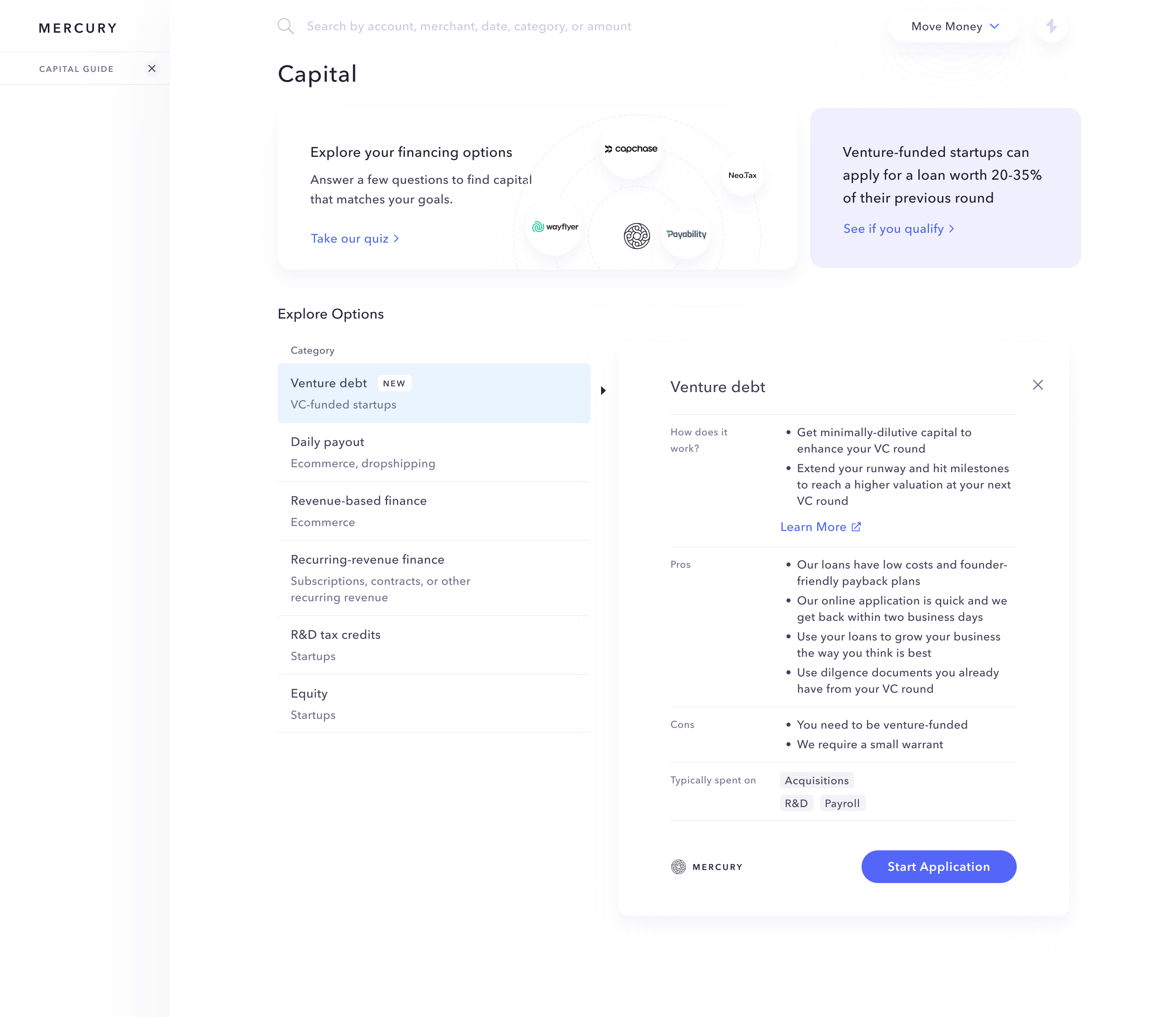
From scan-everything to compare-twoThe first build was an honest table. It was complete and unusable: every row demanded the same attention. The shipped version keeps the list scannable and moves depth into a drawer, so comparison happens between two things, not six.
Five questions, one per screen
Capital Guide · 5 steps, resumableEvery question earns its place by eliminating a product.
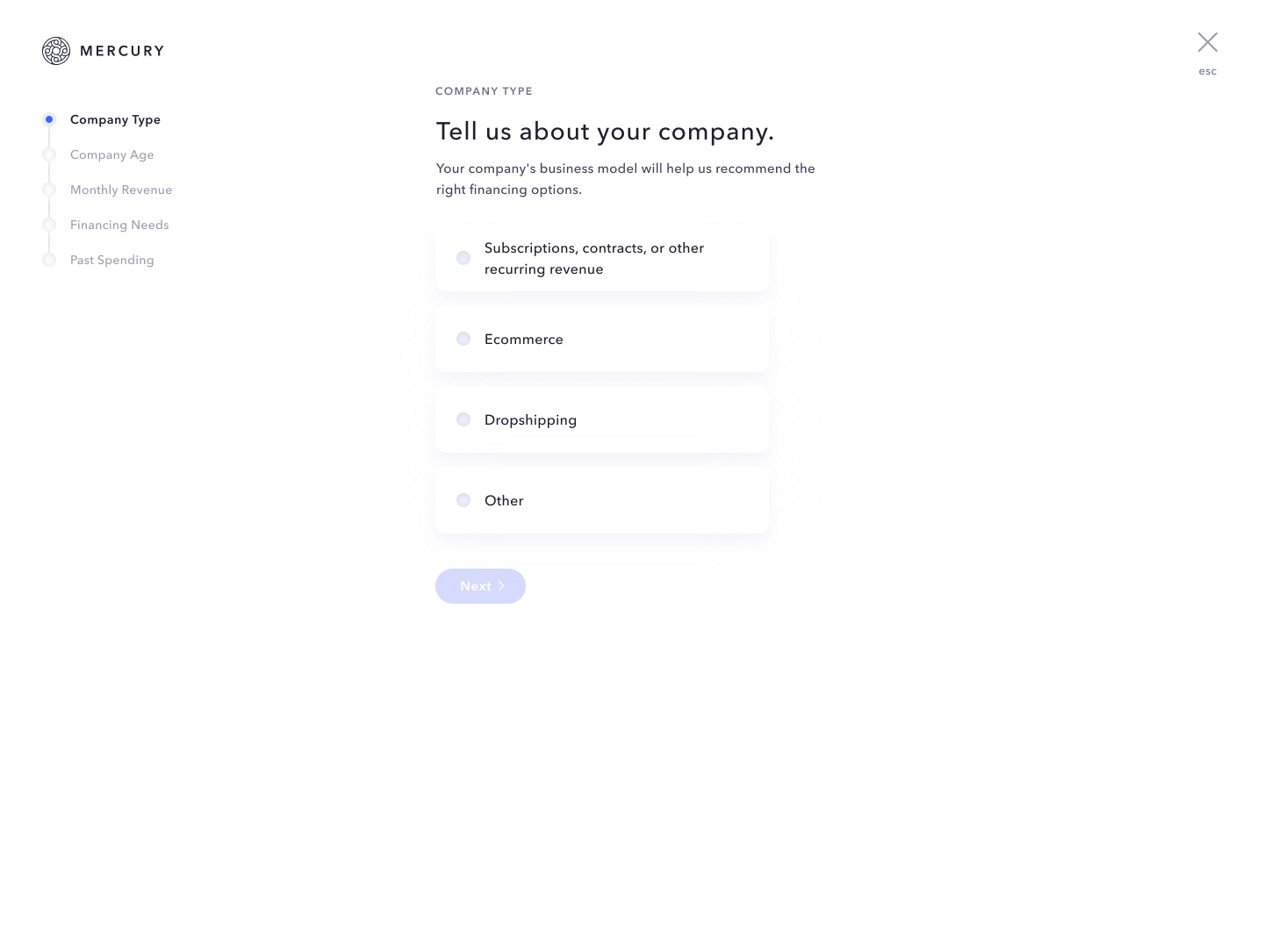
Recurring revenue, ecommerce, dropshipping, or other. This single answer decides which lenders can even look at you. Asking it first means nobody fills out four screens to be told no.
Founders don’t think “I need revenue-based finance.” They think “I need to buy inventory.” So the options are shapes of spend, and the system does the mapping.
“Did you create or improve anything technical last tax year?” Plain language for R&D tax credits, up to $250K a founder is already owed. Most people don’t know to ask, so the quiz asks for them.
Half of founders leave mid-quiz to check a number. When they come back, Capital is filtered to their recommendations with a “Finish up” prompt instead of starting over. The unfinished state is a real state, designed on purpose.
Applying and living with the loan
A recommendation only helps if the application is easy to finish. Diligence reuses what the VC round already produced, and the loan gets a permanent home in the sidebar.