Holdings workspace
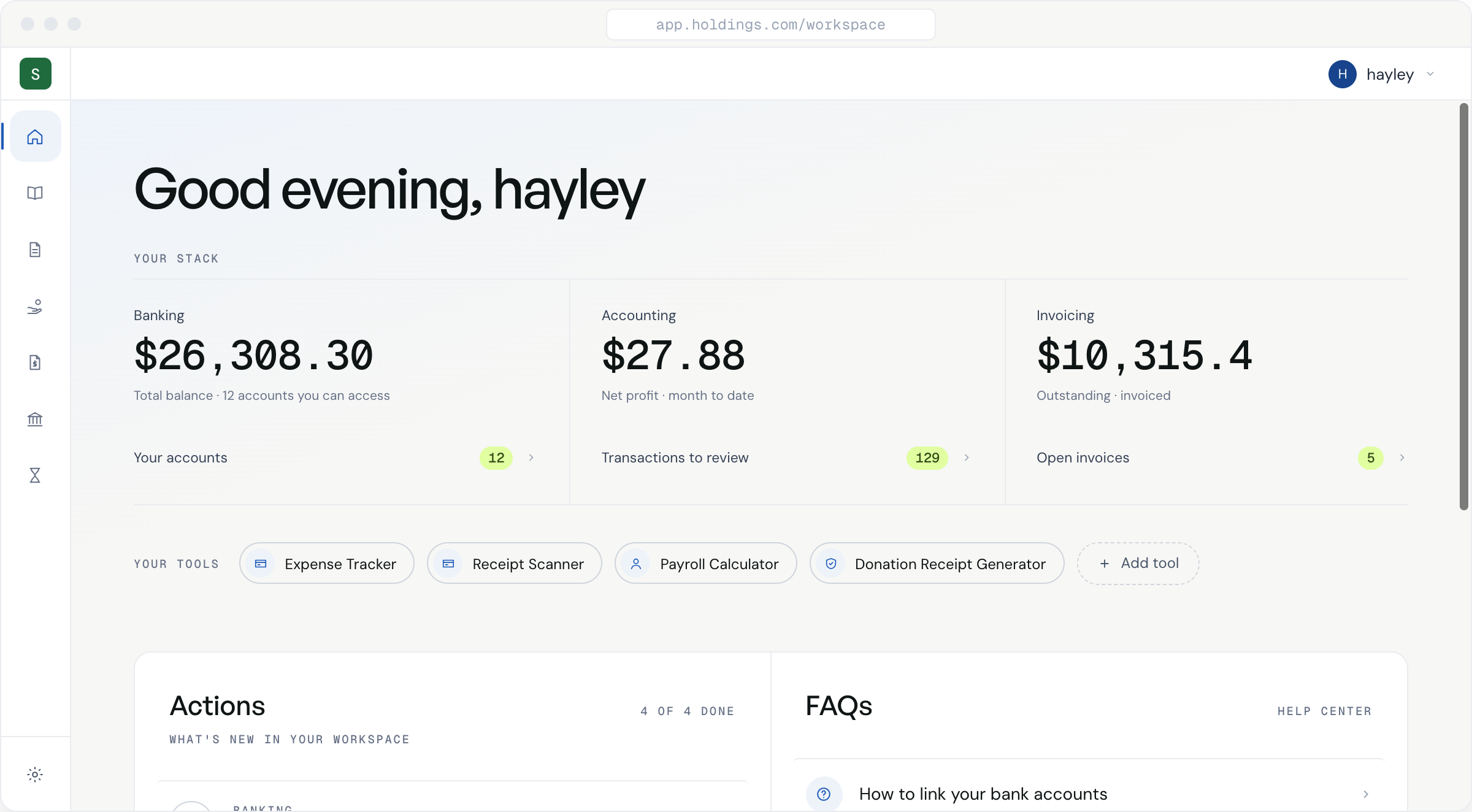
Final design · interactive version in Solution
Problem
Customer acquisition for banking was expensive and slow, and we couldn’t scale it. Banking was too big a commitment to move customers over quickly without a sales process.
Accounting was already built into the banking product. We wanted to pull it out as a stand-alone product and add invoicing, which customers were requesting. We also had customers who had completed full KYC and KYB and were on the banking platform only to use accounting.
Hypothesis
We wanted accounting, invoicing and free tools that worked with any bank to act as lower-hurdle products: loss leaders that brought customers in, so we could convert them to banking.
Entry point. Bring your own bank: connect existing accounts to categorize and report.
→ Invoicing · → BankingEntry point. Send invoices and get paid into whichever bank you already use.
→ Accounting · → BankingConversion goal. Customers already using the stack were offered a Holdings account inside the workspace.
Discovery
We launched a stand-alone accounting tool and ran Google Ads to test interest.
We spoke with small business owners to see if they would want accounting or invoicing on their own.
The in-person conversations were promising, so we built it.
The ads drove strong traffic to the landing page and several sign-ups, but not enough paying customers. The conversations were what convinced us to build.
The ads
Accounting KetchupTo test demand for stand-alone accounting we launched a set of social ads. Each one put a bottle of ketchup into a different era of bookkeeping, under one line of copy.
Brief
We needed a new platform where customers could sign in and sign up for banking, accounting or invoicing separately, with KYC run separately for each. Banking requires significantly more KYC and KYB, and we wanted an easy entry point to our products.
Competitive analysis
At the time, no other product on the market combined banking, accounting and invoicing.
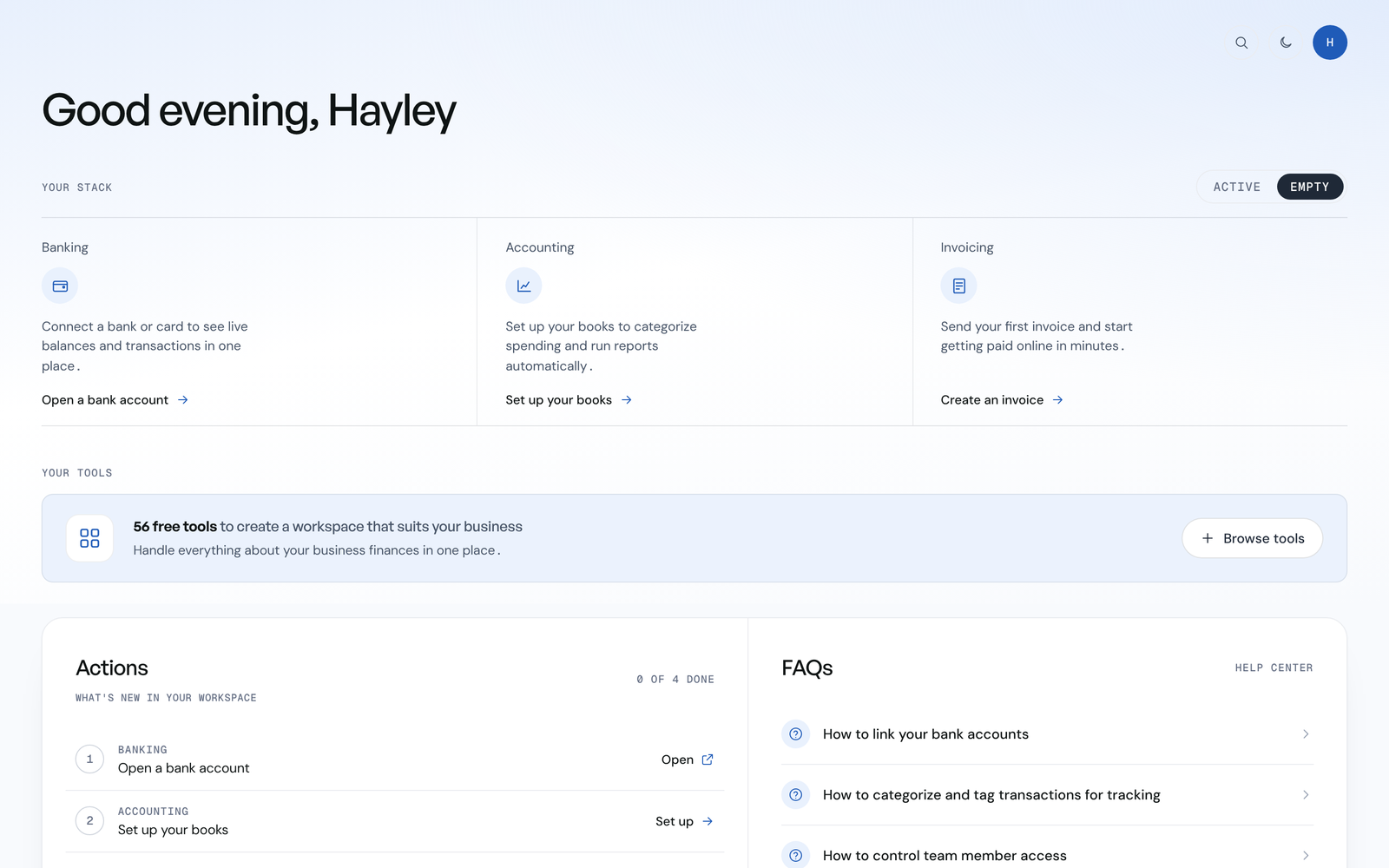
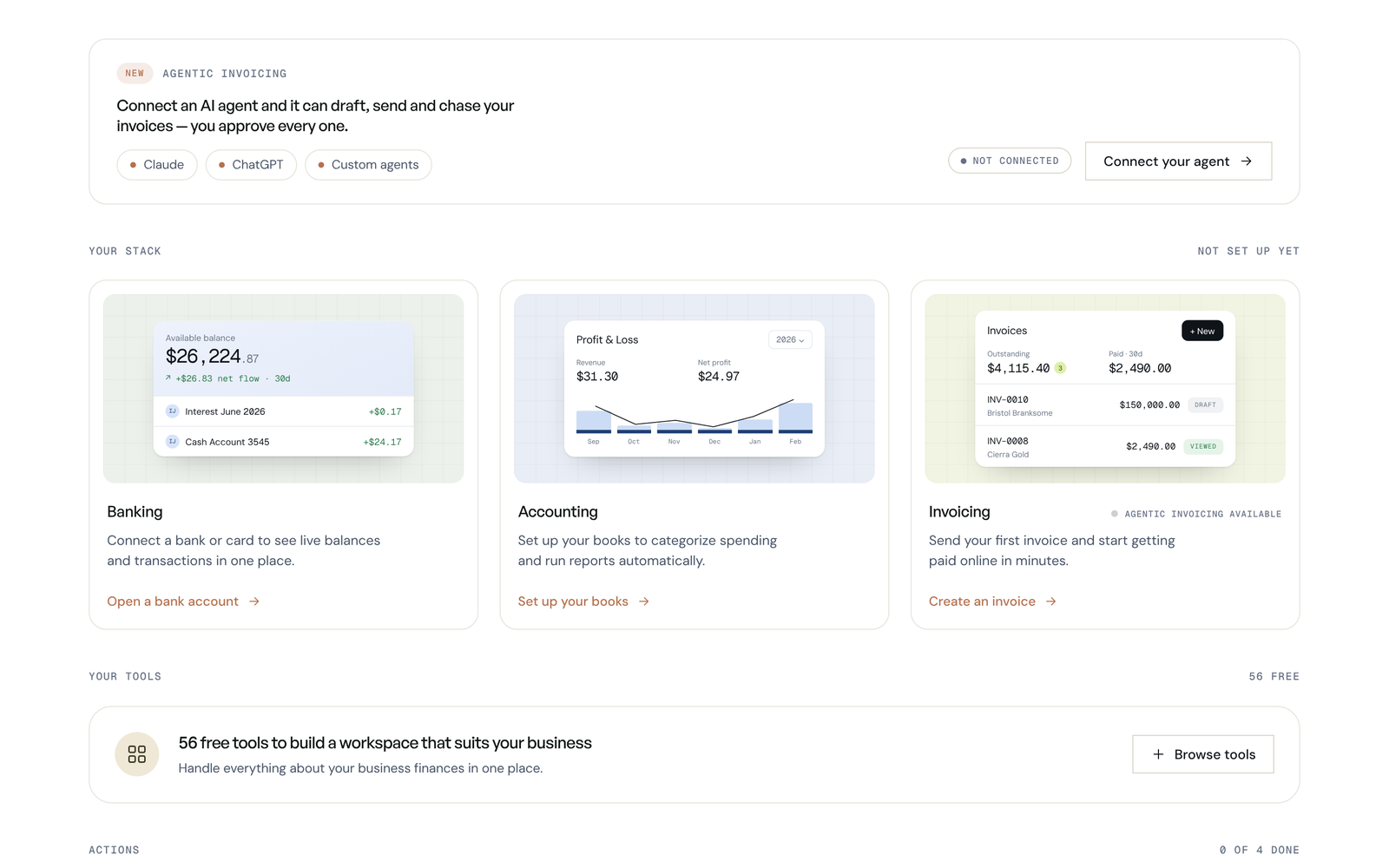
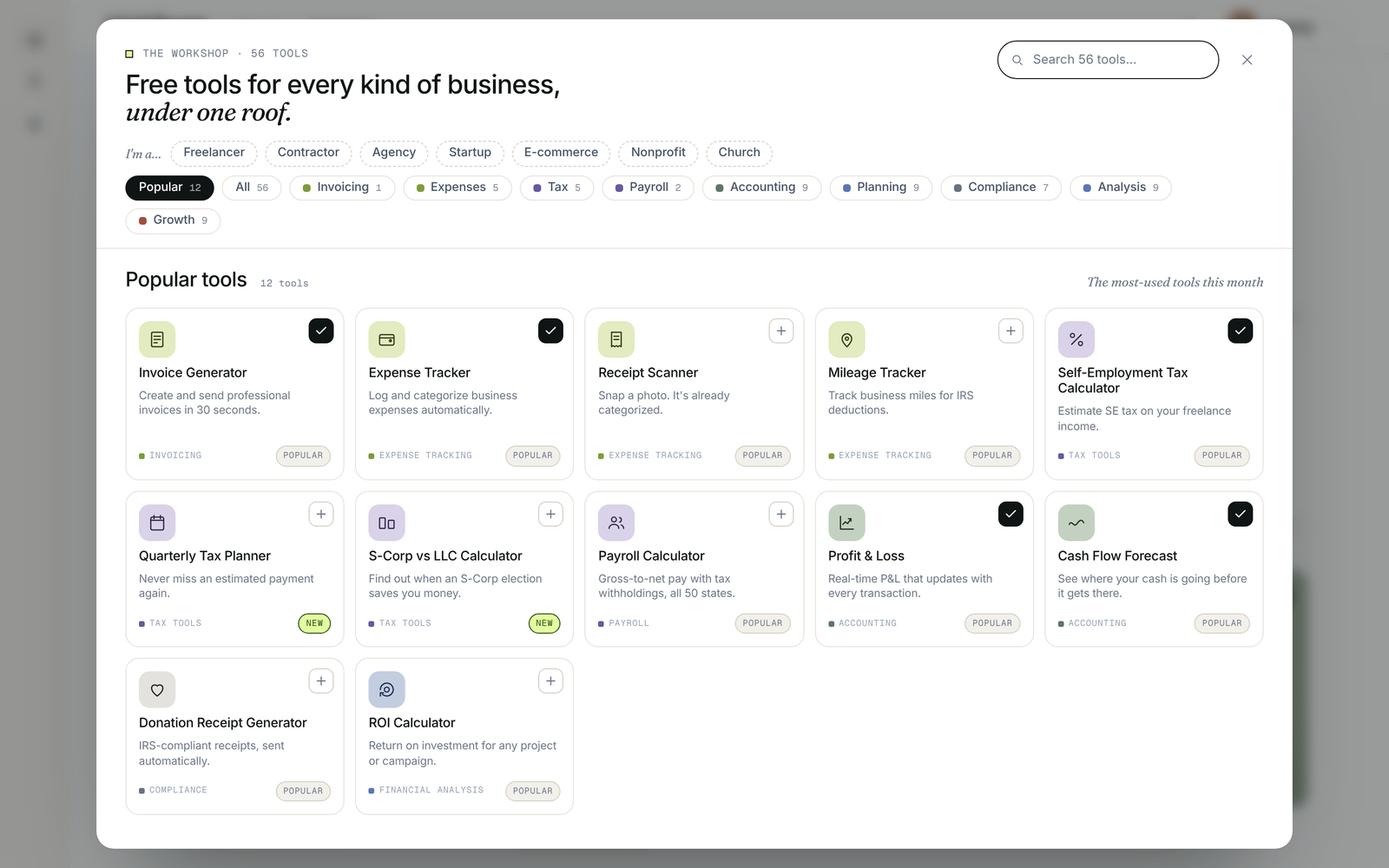
Design options
We designed the options in Claude Design and built the final version in Vercel.
Constraints and trade-offs
- Separate KYC per product. Accounting and invoicing needed light KYC; banking needed full KYC and KYB. The workspace had to let customers start one without committing to the others, without making banking feel like a separate company.
- Customers already in banking. Some had completed full KYC only to use accounting. The new structure couldn’t break their setup.
- Speed. We designed options in Claude Design and built the final version directly in Vercel, which got it in front of customers in 4 weeks.
Solution
We created a financial workspace that sat in front of banking and acted as a dashboard. Customers could see a summary of banking, accounting and invoicing, sign up for any of the three, and access the free tools we had built as acquisition products.
Good evening, hayley
Final design · hover the sidebar to expand it · scroll inside for Actions and FAQs
Success criteria
We said the workspace would succeed if it (1) lowered the barrier enough to bring in companies who wouldn’t sign up for banking, and (2) converted enough of them to grow the bank.
Outcomes
After launch, June 2026Accounting sign-ups also increased significantly after launch.
What I learned
Taking out the gates worked.
Monthly sign-ups grew 10x, and accounting sign-ups increased significantly once the workspace went live. As an experiment in lowering the barrier to entry, it succeeded.
What it couldn’t do was create distribution. We never reached the scale needed to make the product profitable or grow the bank. Lowering the barrier gets people in the door, but it doesn’t bring them to the door.